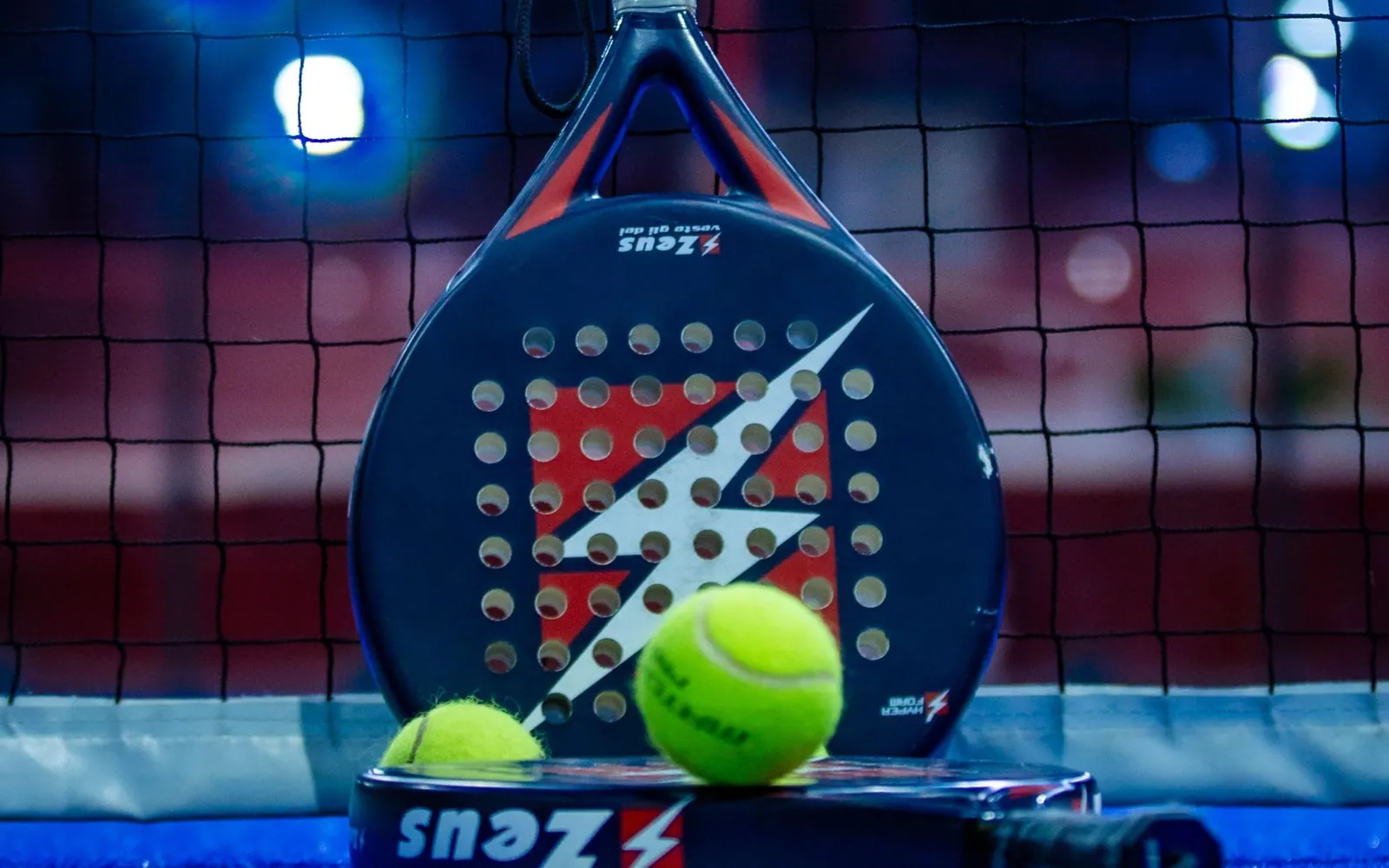
Padel balls look like tennis balls, but they are built for a smaller court with walls. They have lower pressure, so they bounce lower and stay in play off the glass. This guide covers the best balls you can buy in the UK, what the different types are for and how long a tube really lasts.
Padel balls vs tennis balls
The two balls are close in size and both have yellow felt, but a padel ball has lower internal pressure. That means a lower, more controllable bounce, which suits a court where the ball comes back off the back and side glass. A tennis ball on a padel court flies off the walls and makes rallies harder to control.
| Padel ball | Tennis ball | |
|---|---|---|
| Pressure | Lower | Higher |
| Bounce | Lower and slower | Higher and faster |
| Size | Very slightly smaller | Standard tennis size |
| Made for | Enclosed court, play off the glass | Open court |
| Rules | Approved by the International Padel Federation (FIP) | Approved by the ITF |
The best padel balls in the UK
We compared what UK clubs and retailers stock and what specialist padel writers recommend. We haven’t lab-tested these balls ourselves, and no brand paid to be included. Prices change often, so check before you buy.
| Ball | Best for | Feel | Price guide | |
|---|---|---|---|---|
| Head Padel Pro+ | Most club players | Lively, consistent | About £5–£7 a tube | Check price |
| Head Padel Pro S+ | Players who play often and want speed | Faster, keeps its bounce well | About £5–£7 a tube | Check price |
| Bullpadel Premium Pro | Match play | All-round, widely used in tournaments | About £5–£6 a tube | Check price |
| Wilson Padel (Tour / Premier Speed) | A slightly softer feel | Softer than Head Pro | About £4–£6 a tube | Check price |
| Adidas Speed RX | Value and buying in bulk | Quick, good all-rounder | Cheaper in boxes | Check price |
| Dunlop Pro Padel | Regular club players | Controlled | About £5–£7 a tube | Check price |
Softer, slower balls (such as Wilson or Head Padel One) give you more time while you learn.
Pro S+ style balls hold their bounce longer, which suits players who play several times a week.
Warm indoor halls make balls quicker. If rallies feel uncontrollable, try a slower model.
How long do padel balls last?
Padel balls lose pressure from the moment you open the tube. Most players find a tube feels noticeably flatter after two to four sessions, and much sooner if you play hard every day. Competitive players often open a new tube for every match.
How to make padel balls last longer
- Keep the tube sealed until you play.
- Store balls at room temperature, not in a cold car or hot boot.
- Use a ball pressuriser: a sealed canister that keeps the balls under pressure between games.
- Rotate tubes so you are not always playing with the same three balls.
Is it worth buying a box?
If you play every week, yes. A box of 24 tubes usually works out much cheaper per tube than buying singles, and padel shops often discount boxes. Split a box with your regular group and you will rarely be caught without fresh balls.
Pressurised vs pressureless balls
Almost all padel balls are pressurised: the air inside gives the bounce, and they slowly go flat once the tube is opened. Pressureless balls bounce from the rubber alone, so they last longer, but they feel heavier and are mainly used for coaching and ball machines.
Speed vs control balls
Many brands sell a “speed” ball (slightly livelier) and a “control” ball (a little slower). Indoor courts and cold weather suit a faster ball; outdoor courts in summer and players who like long rallies suit a control ball.
How to make your balls last longer
- Keep opened balls in the tube with the lid on.
- Avoid leaving them in a hot car or a freezing garage.
- A ball pressuriser can extend their life by a few sessions if you play often.
- Use old balls for practice and drills.
Questions people ask
Can you use tennis balls for padel?
You can for a casual knock, but it isn’t a good idea. Tennis balls have higher pressure, so they bounce too high and fly off the glass. Padel balls make rallies easier to control.
What are the official padel balls?
Professional tours use pressurised balls approved by the International Padel Federation (FIP). Head’s Padel Pro range is the ball you will see most at UK clubs.
How much do padel balls cost?
About £4–£7 for a tube of three in the UK. Boxes of 24 tubes bring the price per tube down a lot.
Why do padel balls go flat so quickly?
They are pressurised, and the gas slowly escapes once the tube is opened. Hard hitting and warm temperatures speed this up.
Do padel ball pressurisers work?
They help. Keeping balls under pressure between games slows how quickly they go flat, so a tube lasts more sessions.
How many padel balls do you need?
Three per game is standard: one tube. Many players open a new tube for every match.