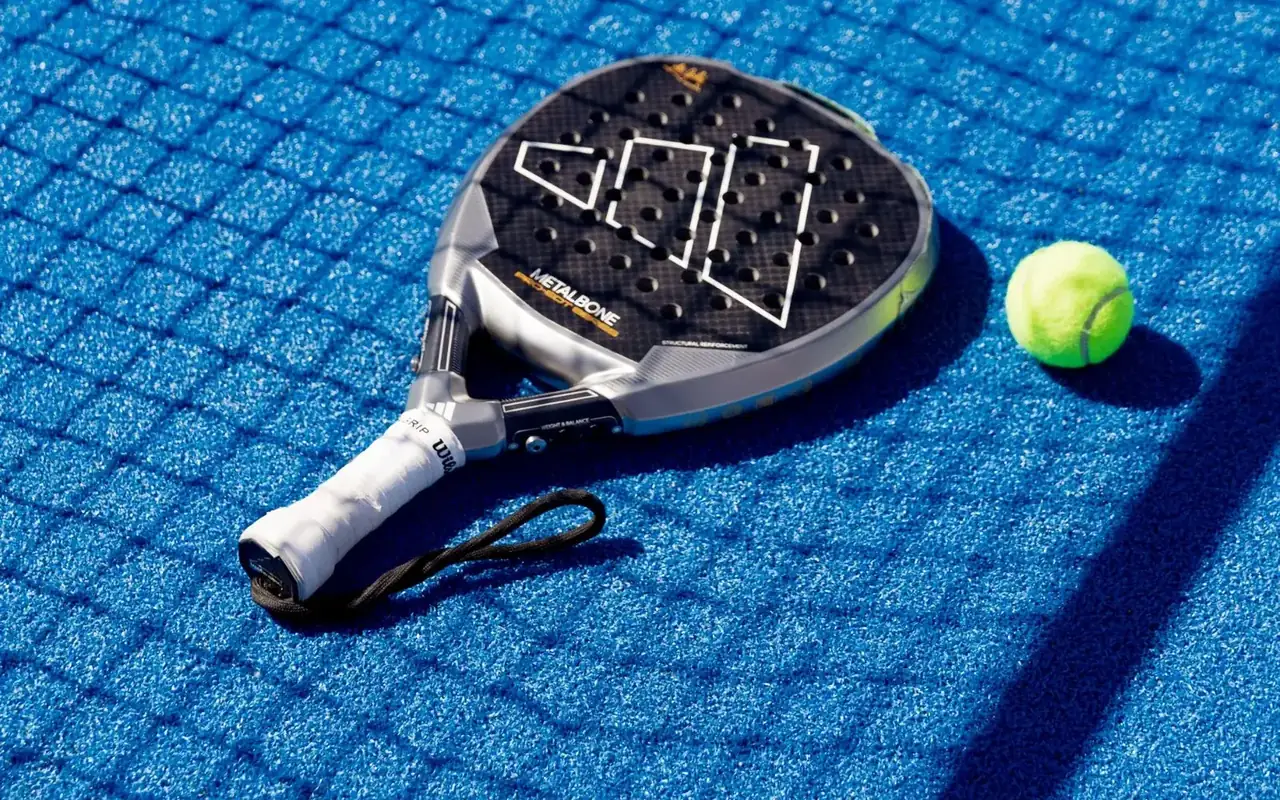
Padel rackets all look similar, but the shape, weight and materials make a big difference to how they feel. For your first racket, you want something forgiving and comfortable rather than powerful.
1. Shape: go round
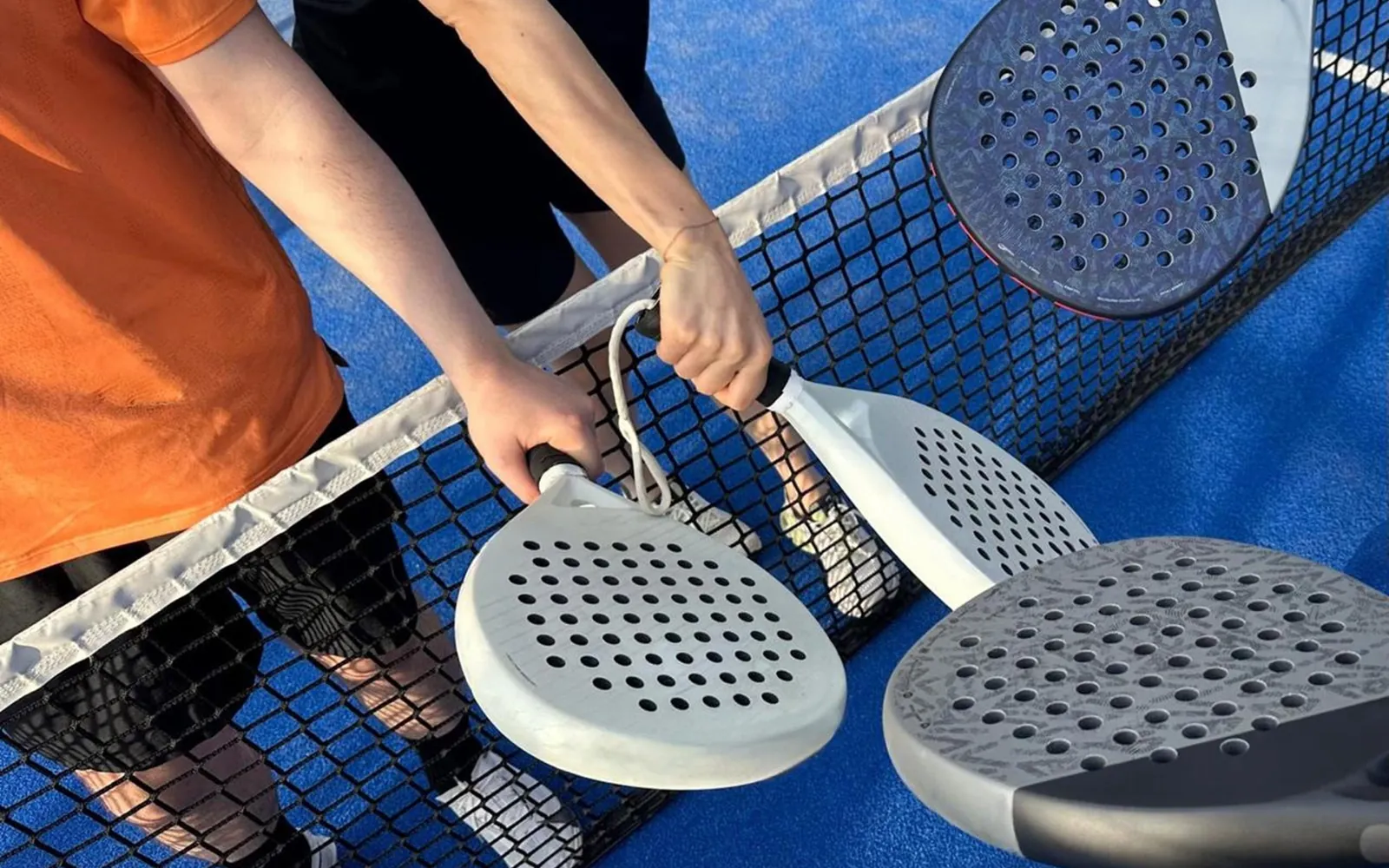
There are three main shapes.
- Round: the sweet spot is low and large, so off-centre shots still go back. Best for beginners.
- Teardrop: a balance of control and power. Good once you’re playing regularly.
- Diamond: the sweet spot is high up the face for big smashes. Hard to control, and best left to advanced players.
2. Weight: 345g to 370g
Most beginner rackets weigh between 345g and 370g. Lighter rackets are easier to swing and kinder on your arm. If you’re not sure, choose a lighter one.
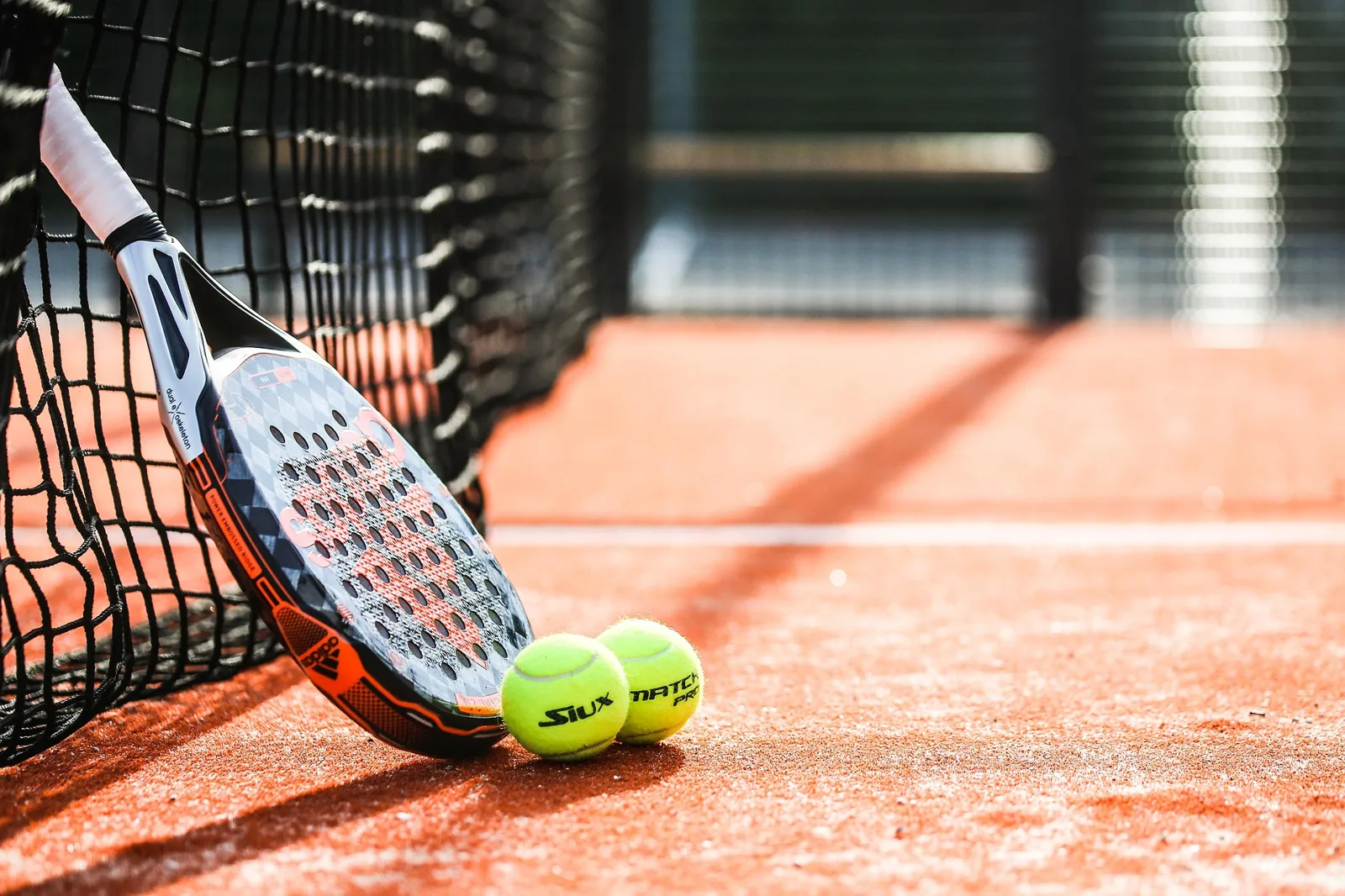
3. Core: soft foam
The core is the foam inside the racket. Soft cores, usually EVA soft or foam, feel comfortable and help the ball off the racket with less effort. Hard cores give more control at speed but feel harsh until your technique is good.
4. Face: fibreglass or soft carbon
Beginner rackets usually have fibreglass or low-carbon faces. They are softer and more forgiving. High-carbon faces such as 12K and 18K are stiffer and suit stronger players.
5. Balance: low or even
A head-light or even balance makes the racket easy to handle at the net. Head-heavy rackets add power but tire your arm.
6. Price: £50 to £100
You don’t need an expensive racket to start. Rackets between £50 and £100 are made for beginners, and expensive pro rackets are often harder to play with.
Quick checklist
- Round shape
- 345g to 370g
- Soft foam core
- Fibreglass or soft carbon face
- Low or even balance
- £50 to £100
Your first racket
- Shape
- Round
- Weight
- 345g–370g
- Core
- Soft EVA or foam
- Face
- Fibreglass or soft carbon
- Balance
- Low or even
- Budget
- £50–£100
Want some suggestions? See our pick of the best padel rackets for beginners.
Round, teardrop or diamond: shapes compared
| Shape | Balance | Sweet spot | Best for |
|---|---|---|---|
| Round | Low (towards the handle) | Large, in the centre | Beginners and control players |
| Teardrop | Medium | Medium, slightly higher | Improvers who want some power |
| Diamond | High (towards the head) | Small, near the top | Advanced, attacking players |
If you are new, a round racket with a low balance is the safe choice: it is easier to control and kinder to your arm. You can see our picks in the best padel rackets for beginners.
When to upgrade
Most players keep their first racket for a year or two. It is worth upgrading when you are playing two or more times a week, you are confident with the bandeja and volleys, and you want more power. A good rule is to try a friend’s racket or a club demo before you buy, because feel matters more than the spec sheet.
Look after your racket
- Keep it out of hot cars and freezing boot spaces: extreme temperatures soften or crack the core.
- Use an edge protector tape if you often scrape the ground.
- Replace the overgrip every few weeks if you play often.
- Store it in a cover or racket bag. See the best padel bags.
Questions people ask
What racket shape is best for beginners?
Round. It has a bigger, lower sweet spot and is easier to control.
How heavy should a beginner padel racket be?
Around 345g to 370g. Choose lighter if you have any arm or shoulder problems.
Should I buy an expensive padel racket?
Not as a beginner. Pro rackets are stiffer and less forgiving.
Does racket weight matter in padel?
Yes. Lighter rackets (about 345g to 360g) are easier to control and kinder to your arm; heavier ones give more power but tire you faster.
How long does a padel racket last?
For a weekly player, usually one to two years before the core softens and loses its pop. Heavy players may replace one every season.