Padel is one of the easiest racket sports to start. Most people can rally in their first hour, because the court is small, the serve is underarm and the glass walls keep the ball in play. This guide takes you from turning up at the court to playing a proper game, step by step.
Short answer: padel is played two against two on a 20m × 10m court enclosed by glass. You serve underarm, diagonally, after bouncing the ball. The ball must bounce once on the other side before it can hit their walls, and you can play it off your own walls after it bounces. Points are scored like tennis: 15, 30, 40, game.
What you need
- Three other players. No group? Join a beginner session or an open match. See how to find people to play with.
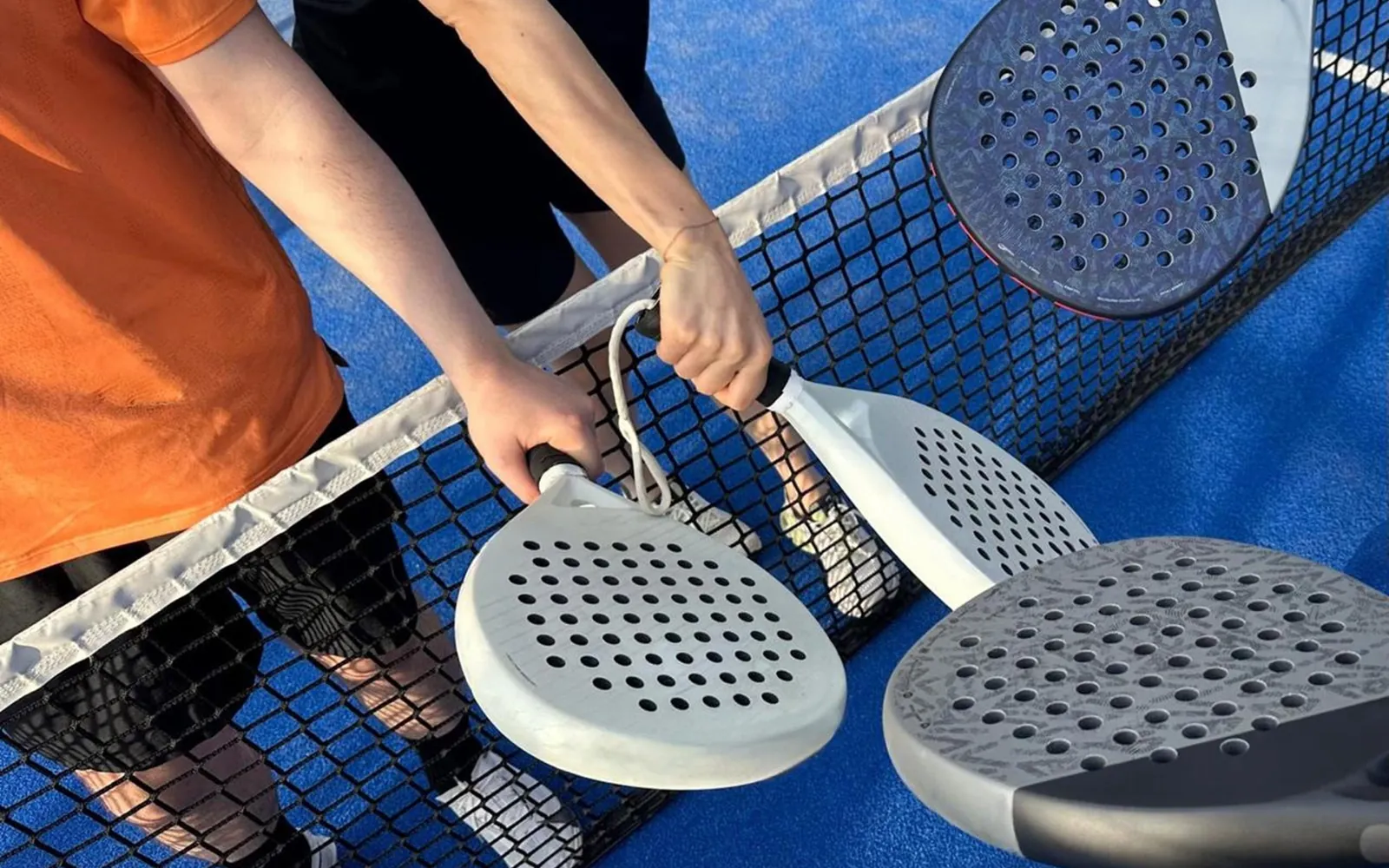
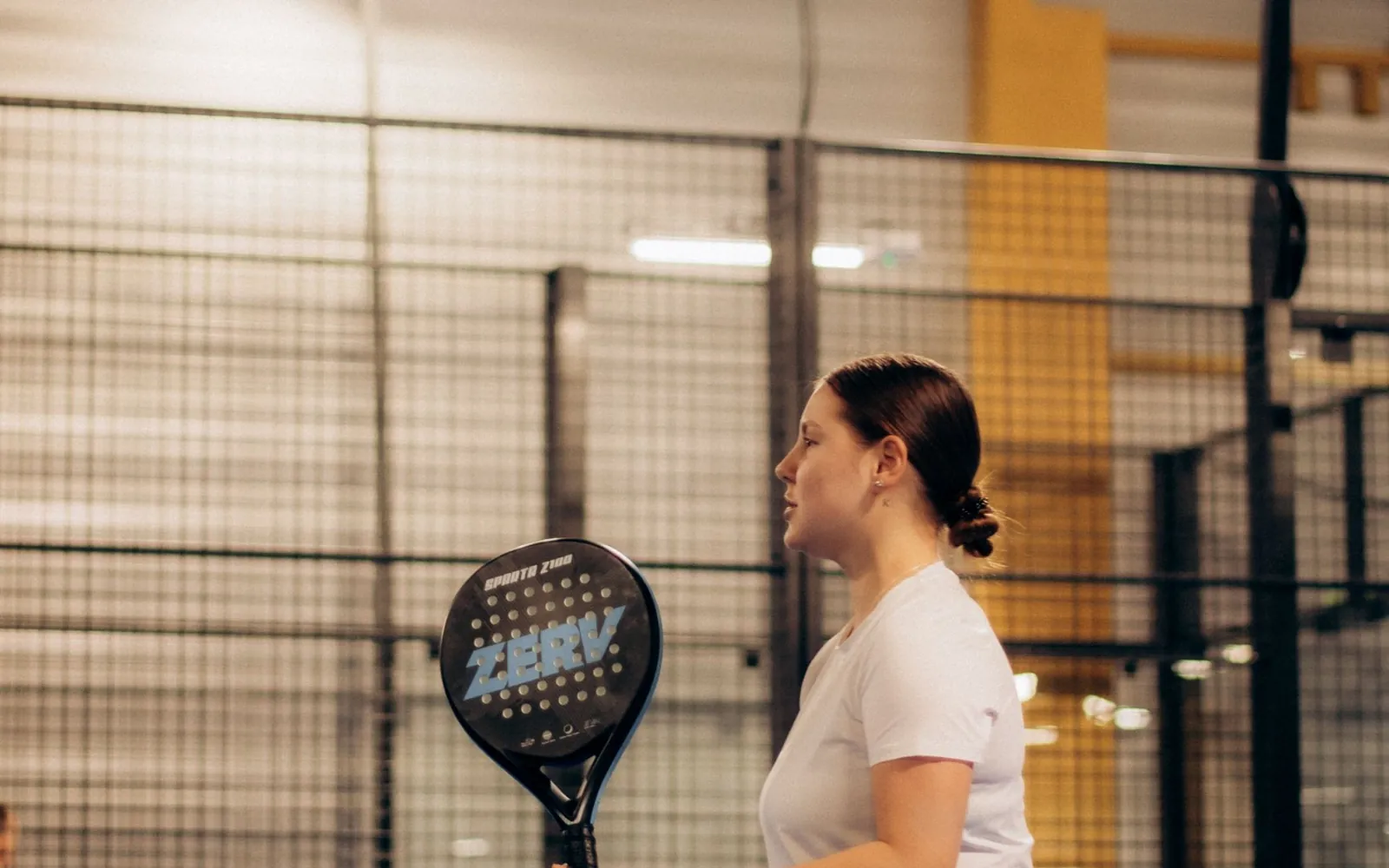
- A padel racket. Almost every UK club hires them for £2 to £5.
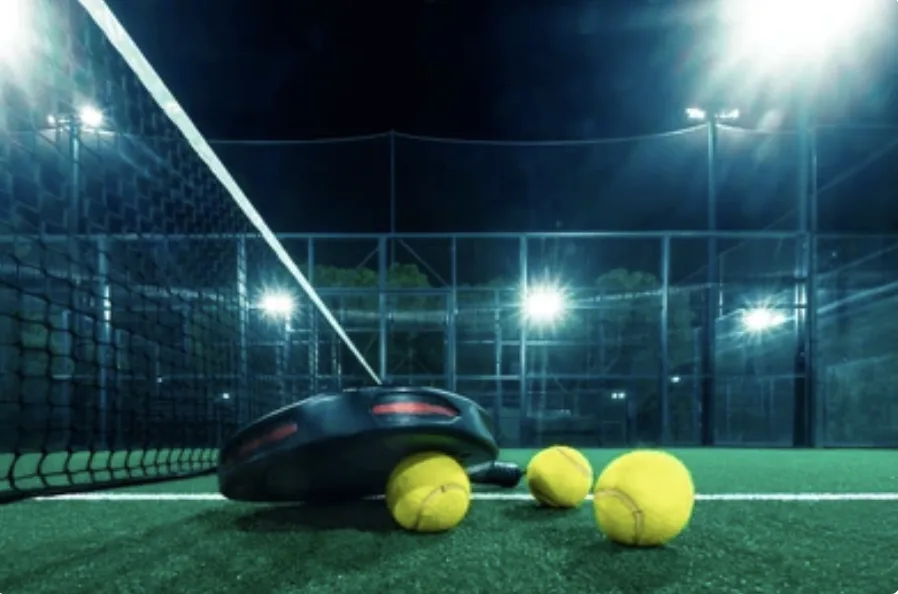
- Padel balls. A tube of three costs about £5 to £8. Tennis balls are too bouncy.
- Trainers with grip. Padel or clay-court shoes are best. See padel shoes.
- A court booking. Search every UK padel club or find one near you.
Step 1: Know the court
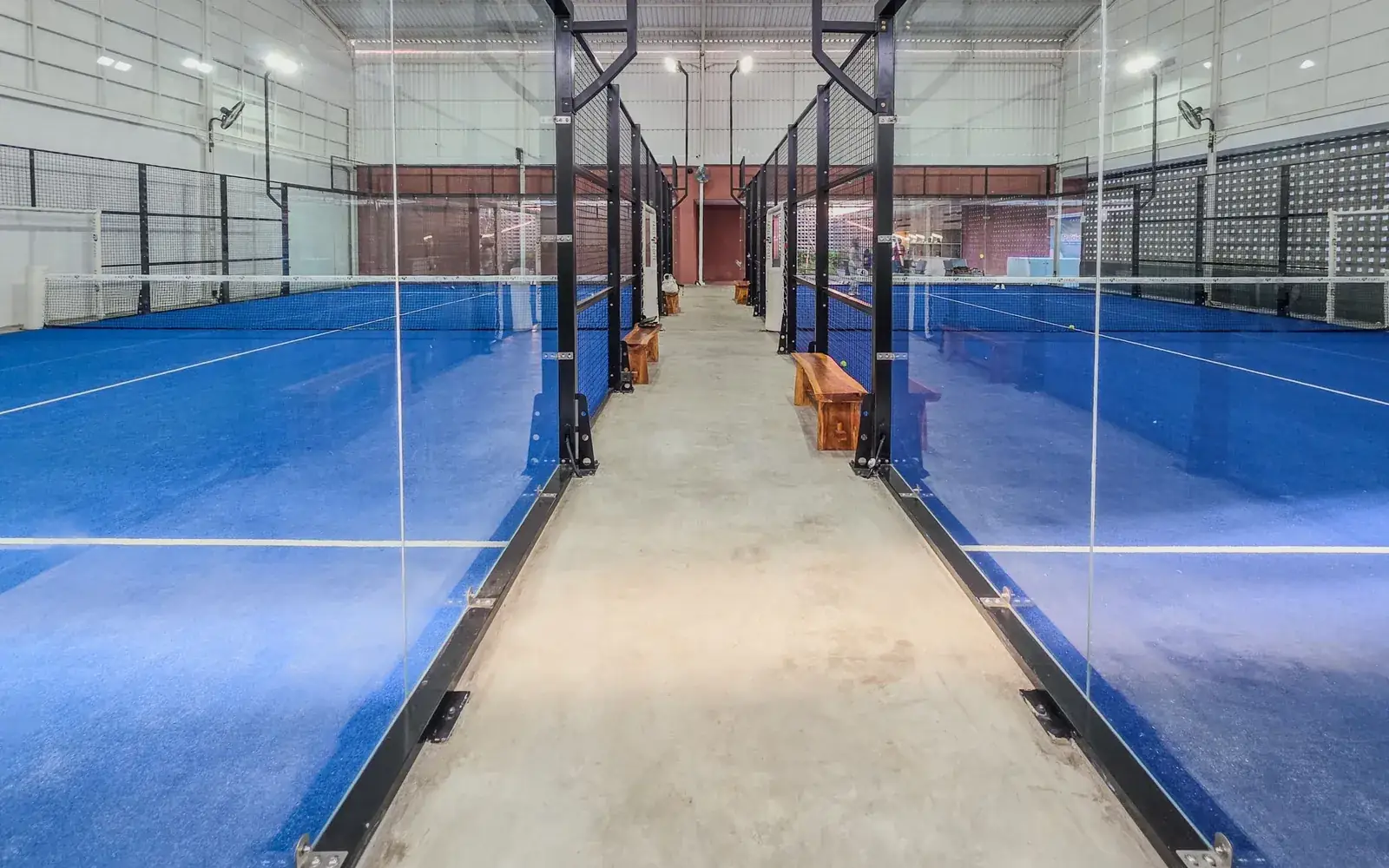
A padel court is 20 metres long and 10 metres wide, split by a net that is 88cm high in the middle. There are glass walls at each end and a mix of glass and mesh along the sides. The lines on the floor are only used for the serve: a service line 6.95m from the net and a centre line that splits each half into two service boxes.
Every measurement is in our padel court size guide.
Step 2: Hold the racket
Use a “continental” grip, as if you were shaking hands with the racket, with the edge of the face pointing at the net. It lets you hit forehands, backhands, volleys and overheads without changing grip. Put the wrist strap on: it is a rule, and it stops a racket flying into a glass wall or a player.
Step 3: Serve
- Stand behind the service line, on the right-hand side, to start the game.
- Bounce the ball once behind the line.
- Hit it underarm, with the ball at or below your waist, diagonally into the box opposite.
- It must bounce in that box. It can then hit the back or side glass, but not the mesh fence.
- You have two attempts, as in tennis. Swap sides of the court after every point.
You cannot volley the serve. Let it bounce, and if it comes off the glass, you can play it after the glass.
Step 4: Rally, and use the walls
After the serve, the ball can be hit before it bounces (a volley) or after one bounce. Once it has bounced on your side, it can come off your back or side glass and you can still play it. This is the heart of padel. Beginners often rush to hit the ball before it reaches the glass; instead, let it come off the back wall, turn with it, and hit it as it comes out.
When you hit the ball over, it must land in the opponents’ court before touching any of their walls. A ball that flies straight into their glass or fence is out. You can, however, hit the ball into your own wall to get it back over the net, which is a handy escape shot when you are stuck in a corner.
Step 5: Know how to win and lose a point
| You win the point when… | You lose the point when… |
|---|---|
| The ball bounces twice on the opponents’ side | The ball bounces twice on your side |
| The ball hits their mesh fence after bouncing and they can’t return it | You hit the ball straight into their glass or fence |
| They hit it into the net or out of the court | You touch the net, or the ball hits you |
| They hit the ball twice or volley your serve | You hit the ball twice |
Step 6: Keep score
Scoring is the same as tennis: 15, 30, 40, game. Sets are first to six games, with a tie-break at 6-6. At 40-40, most social games use a golden point (the next point wins, and the receivers choose which side to receive on). From 2026 the professional tours use the Star Point. The full rules are in our padel rules and scoring guide.
Step 7: Stand in the right place
Padel is a game of positions. Both players should move up to the net together after a good shot, and back together when they are lobbed. The pair at the net hits volleys and smashes; the pair at the back defends, uses the glass and lobs to win the net back. Read where to stand in padel doubles before your second game.
Step 8: Learn three shots first
A short punch, not a swing, with the racket in front of you. It is the most important shot in padel.
A high, deep shot over the net players. It pushes them back and lets you take the net.
Let the ball bounce and come off the glass, then turn and hit it gently back.
Once those feel natural, learn the bandeja (the controlled overhead) and the víbora. Our guide to padel shots explains every shot.
Your first session: what to expect
Most clubs run “intro to padel” sessions for £10 to £15 a person, with a coach, rackets and balls included. In an hour you will learn the grip, the serve, the walls and the basic positions, then play some points. It is the fastest way to start, and you meet other beginners to play with afterwards. See padel lessons and coaching for prices and what to look for.
Questions people ask
How do you play padel for beginners?
Play doubles, serve underarm after a bounce into the diagonal box, let the ball bounce once on your side, use your own walls after it bounces, and score like tennis. An intro session with a coach is the quickest way to learn.
Can the ball hit the wall in padel?
Yes, on your side, after it has bounced. Before it bounces, the ball must not hit the opponents’ walls, or the point is lost.
Do you have to serve underarm in padel?
Yes. The ball must be bounced and hit at or below waist height.
How long does it take to learn padel?
Most people can rally in their first session and play a proper game after a few weeks. Using the walls well takes a few months.
Can you play padel with two people?
Yes, on a singles court, or by practising on a normal court. See our singles padel guide.
Is padel hard to learn if you have never played tennis?
No. Padel is often easier for non-tennis players, because there are fewer habits to unlearn.