Padel has its own set of shots, many with Spanish names. Some are familiar from tennis, like the volley and the lob. Others, like the bandeja and the víbora, only make sense once you add glass walls. This guide explains every shot you will hear about, how to play it and when to use it.
Short answer: the essential padel shots are the volley, the lob, the bandeja (a controlled sliced overhead), the víbora (a faster overhead with sidespin), the chiquita (a soft low return), and shots played off your own back and side glass. Learn the volley, lob and back-glass return first; add the bandeja next.
All padel shots at a glance
| Shot | Type | Difficulty | Main use |
|---|---|---|---|
| Volley | At the net | Beginner | Keep control at the net |
| Lob (globo) | From the back | Beginner | Push net players back |
| Off the back glass | Wall shot | Beginner | Defend deep balls |
| Chiquita | From the back | Improver | Win the net back |
| Bandeja | Overhead | Improver | Stay at the net when lobbed |
| Víbora | Overhead | Intermediate | Attack and push opponents back |
| Bajada | Wall shot | Intermediate | Attack a ball coming off the back glass |
| Contrapared | Wall shot | Intermediate | Escape when trapped in the corner |
| Rulo | Overhead | Advanced | Make the ball kick high off the back glass |
| Por tres / por cuatro | Overhead | Advanced | Win the point outright over the walls |
Shots at the net
The volley
A volley is any shot hit before the ball bounces. In padel it is the most important shot of all, because the pair at the net controls the point.
- How: short backswing, racket in front of you, punch through the ball with a slightly open face. Aim deep or at the opponents’ feet.
- When: whenever you are at the net. Keep it simple and in play rather than trying to win the point with every volley.
The block
A short volley with almost no swing, used to absorb a hard shot.
- How: hold the racket firm in front of you and let the ball rebound off it.
- When: when an opponent drives the ball hard at you.
The drop volley
A soft volley that lands just over the net and dies.
- How: cushion the ball with a relaxed grip and an open face.
- When: when the opponents are deep behind the service line.
Overheads
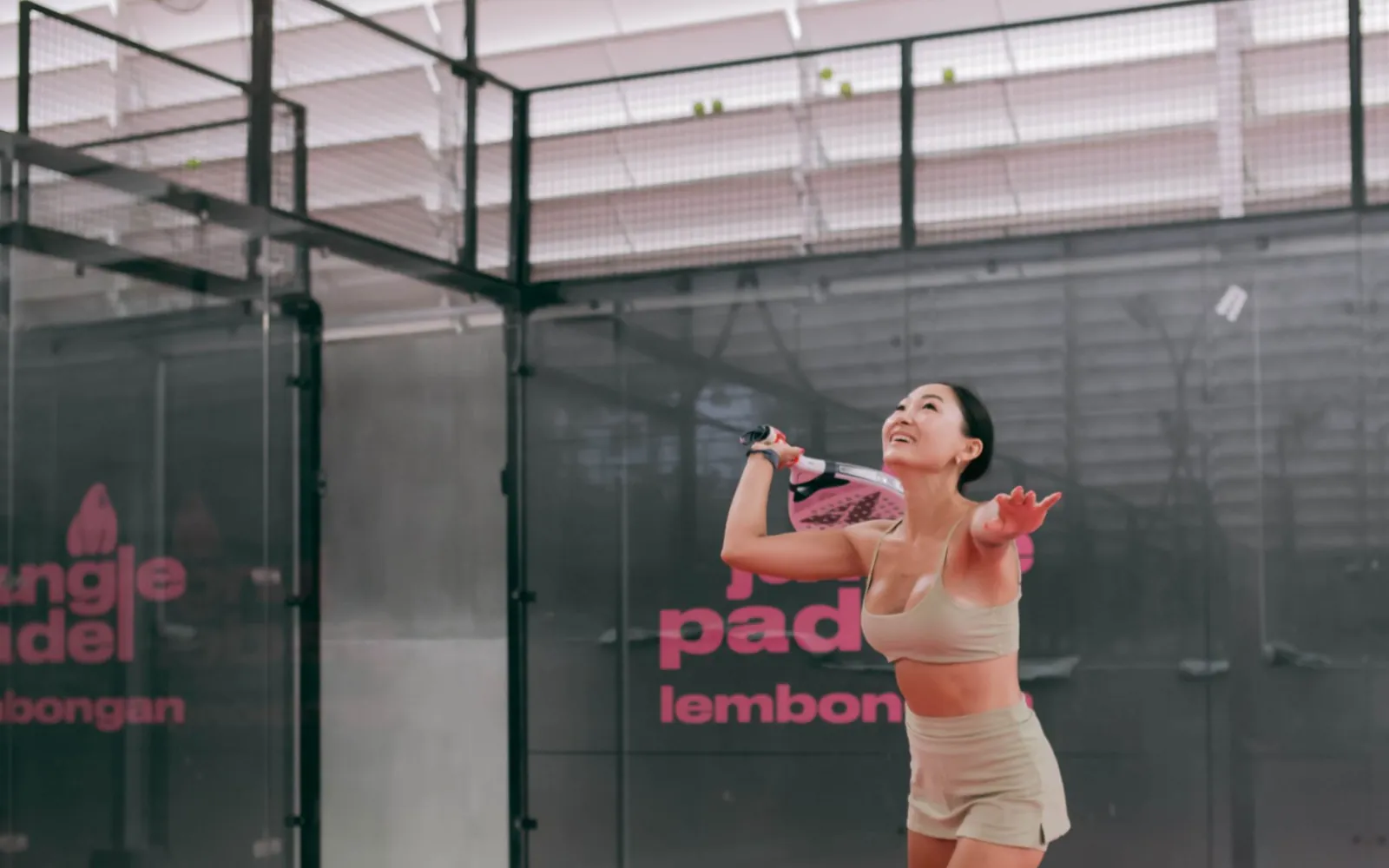
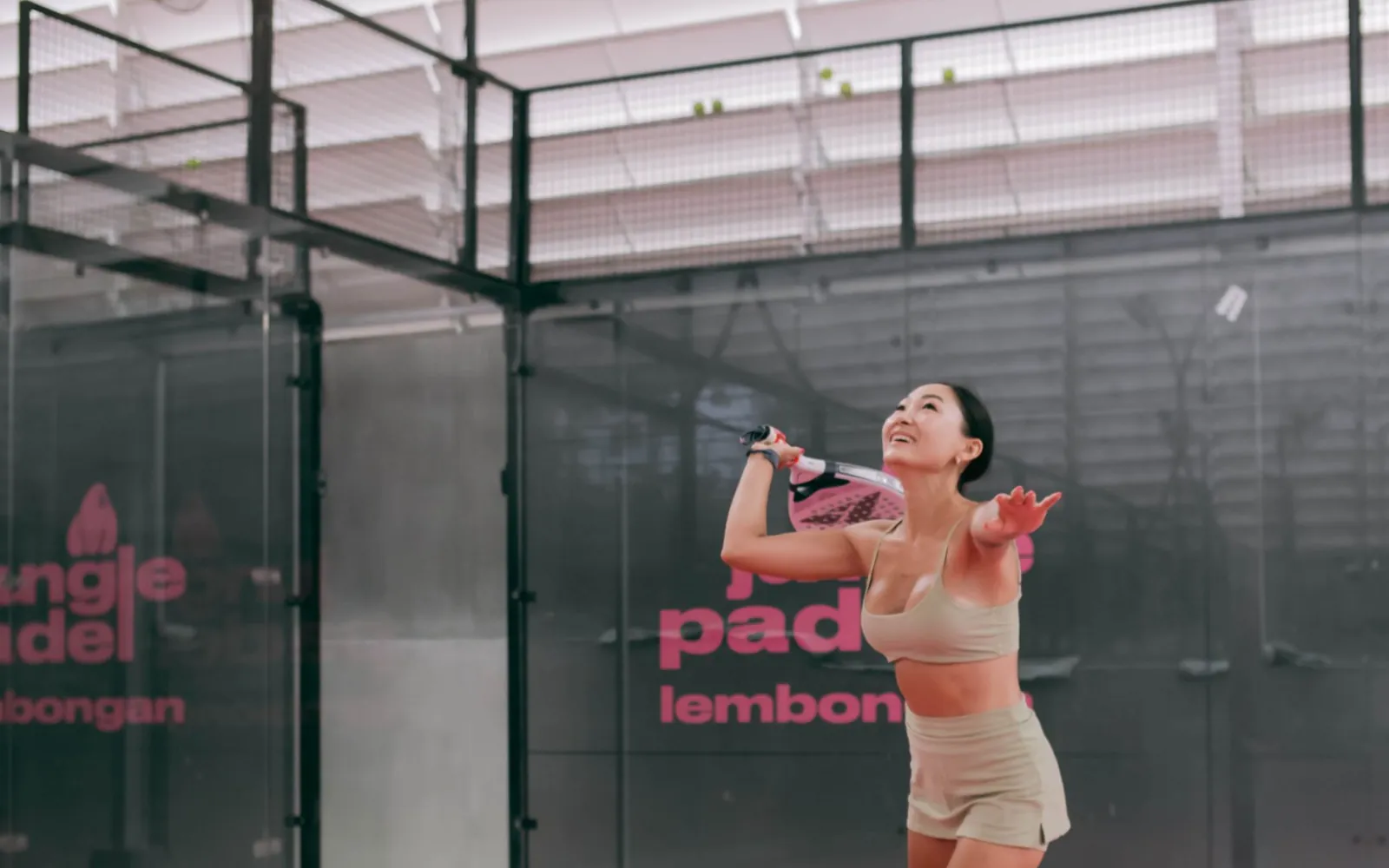
Overheads are where padel differs most from tennis. A flat, hard smash usually bounces off the back glass and comes back, so most overheads in padel are about control and position rather than power.
The bandeja
The bandeja (Spanish for “tray”) is a controlled, sliced overhead hit from around head height. It is the shot that keeps you at the net.
- How: turn side-on, racket up like holding a tray, hit through the side of the ball with slice, aiming deep into the corner.
- When: when you are lobbed but can reach the ball comfortably. It lets you hold the net instead of running back.
The víbora
The víbora (“viper”) is a faster, more aggressive overhead with sidespin, so the ball skids low off the side glass.
- How: hit with more racket speed and more side-spin than a bandeja, contact a little further in front.
- When: on short lobs, to push opponents back and keep pressure on.
The rulo
A topspin smash that makes the ball kick high off the back glass, so it is hard to return.
- How: brush up the back of the ball with a fast, full swing.
- When: on short, high lobs near the net.
Por tres and por cuatro
Smashes hit hard enough that the ball bounces and goes out over the side wall (“por tres”, by three metres) or the back wall (“por cuatro”). If the opponents cannot reach it, the point is won.
- How: a powerful flat or kick smash aimed at the side or back of the court.
- When: only on very short lobs. On courts with open doors, opponents may run outside to play the ball.
Shots from the back
The lob (globo)
A high, deep shot over the net players. It is the main way to win the net back.
- How: open racket face, lift through the ball and aim for the back third of the court, high enough that they cannot smash it.
- When: when the opponents are at the net and you are at the back.
The chiquita
A soft, low return that dips at the feet of the net players, forcing them to volley up.
- How: slow swing, slightly closed face, aim just over the net.
- When: when you want to move forward and take the net yourself.
The drive
A firm groundstroke from the back of the court.
- How: compact swing with control rather than full power.
- When: occasionally, to change the pace or attack a weak ball.
Wall shots
Off the back glass
Letting the ball bounce and come off the back wall, then hitting it as it comes out.
- How: turn your shoulders, move with the ball, wait for it to come off the glass and play it at waist height.
- When: every time a ball is deep. It is the first padel-only skill to learn.
Off the side glass
Playing a ball that has bounced and then hit the side wall.
- How: stay back, let it come off the wall towards the middle, then play it.
- When: when the ball is hit into the corner.
The bajada
An attacking shot from a ball that has bounced and come high off the back glass.
- How: move under the ball as it rebounds and hit down through it like an overhead.
- When: when a lob or smash comes high off your back wall.
The contrapared
Hitting the ball into your own back wall so it rebounds over the net.
- How: a quick upward swing into the glass behind you.
- When: only as an escape, when you are trapped and cannot play the ball normally.
Which shots to learn first
- The volley.
- The lob.
- Playing off the back glass.
- The chiquita.
- The bandeja.
- Then the víbora and the bajada.
A few coaching sessions will speed this up a lot. You can also check where you are with our padel level calculator.
Questions people ask
What is the most important shot in padel?
The volley. The pair at the net usually wins the point, and the volley is how you hold it.
What is a bandeja in padel?
A controlled, sliced overhead hit from around head height, used to stay at the net when you are lobbed.
What is the difference between a bandeja and a víbora?
A bandeja is slower and safer, played to keep the net. A víbora is faster, with more sidespin, played to attack and make the ball skid off the side glass.
What does por tres mean in padel?
A smash that bounces and goes out over the side wall, which wins the point unless the opponents can run outside and play it.
Should you smash in padel?
Only on short, easy lobs. A flat smash usually comes back off the glass, so the bandeja is the better choice most of the time.