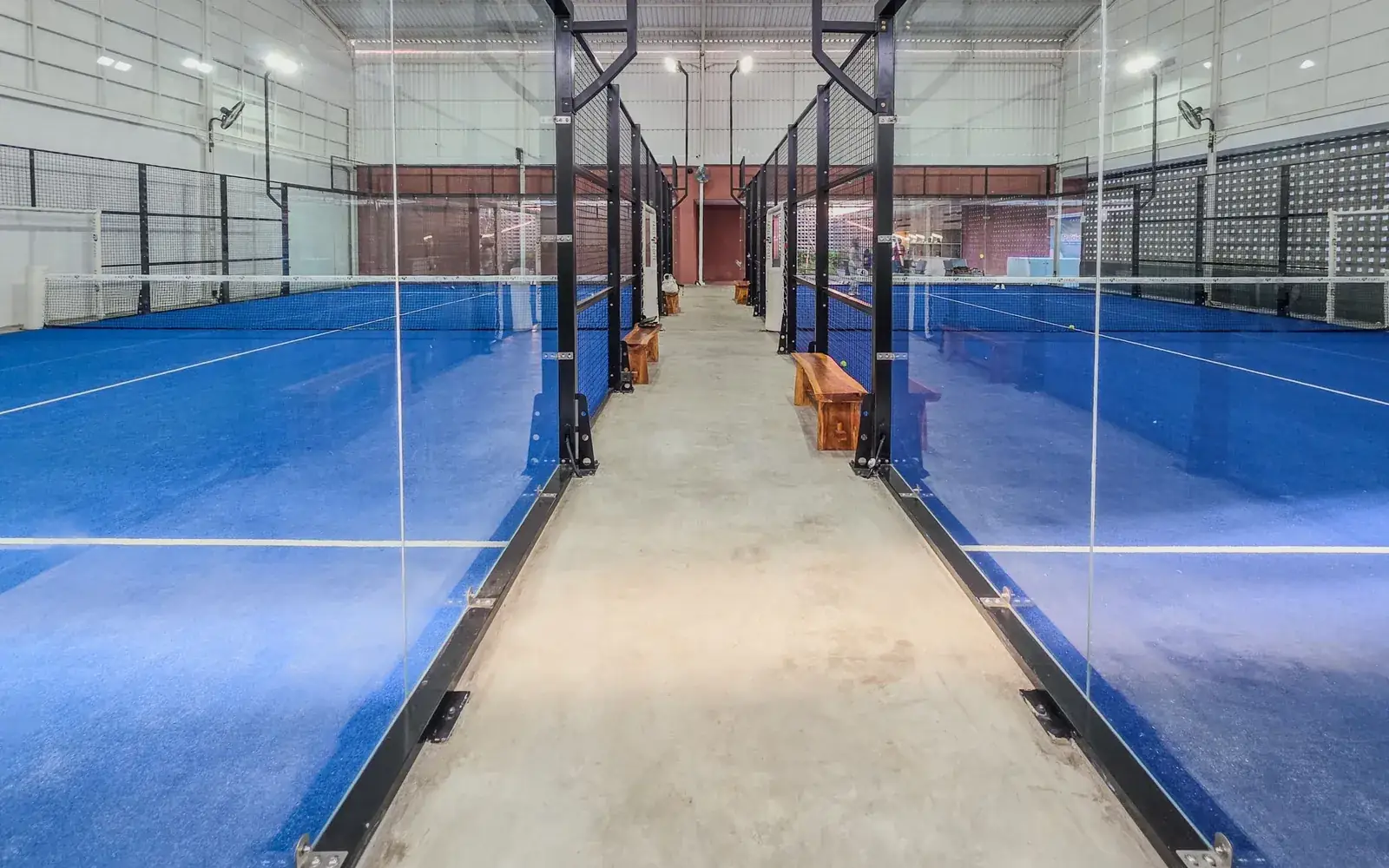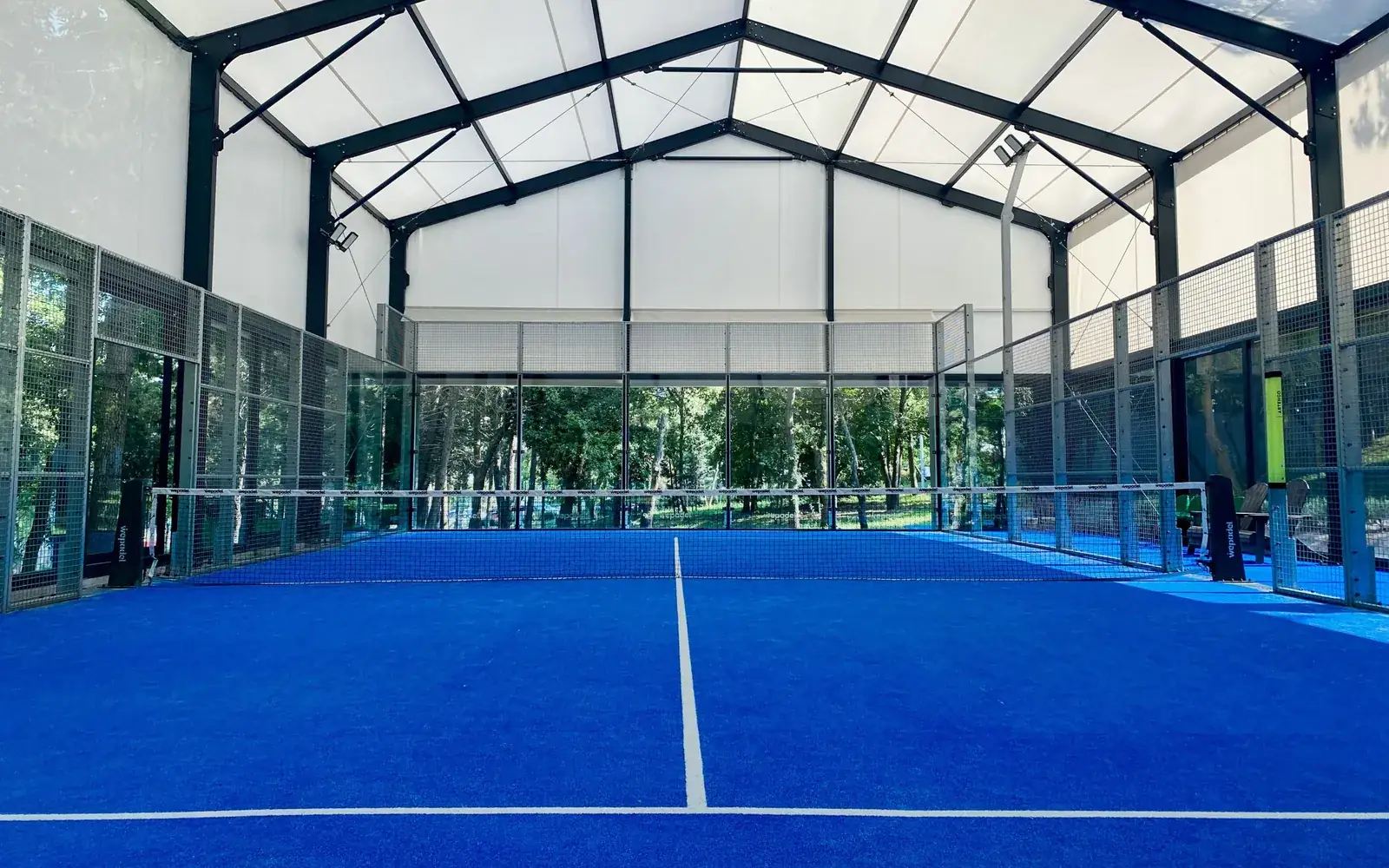
The padel serve is underarm, gentle and easy to learn, but there are a few rules people get wrong. This guide explains how to serve legally, what counts as a fault and how lets work, based on the International Padel Federation (FIP) rules of padel that apply from 1 January 2026.
Short answer: in padel you serve underarm. Stand with one foot behind the service line, bounce the ball inside your own service box, and hit it at or below waist height with at least one foot on the ground. Send it diagonally so it bounces in your opponents’ service box. You get two serves.
How to serve in padel, step by step
- Stand in the right place. Stand behind the service line on your side of the court, between the middle line and the side wall, with at least one foot behind the line.
- Bounce the ball. Drop the ball so it bounces on the ground inside your own service area, behind the service line.
- Hit it underarm. Strike the ball after it bounces, at or below waist height, with at least one foot touching the ground.
- Aim diagonally. The ball must cross the net and bounce in the service box diagonally opposite you. The lines count as in.
- Wait for your opponent. Don’t serve until the receiver is ready. Under the FIP rules you have up to 20 seconds between points.

Where to stand when you serve
The server stands behind the service line, in the half of the court they are serving from, and stays there until the ball is struck. Your feet must not touch the service line or the imaginary centre line, and you can’t step over either before you hit the ball. At the moment you hit the ball, at least one foot must be on the ground, so jump serves are not allowed.
The first point of each game is served from the right-hand side of the court, into your opponents’ box on the diagonal. After each point you switch sides, so serves alternate right, left, right, left. Your partner usually stands near the net on the other side, ready to volley the return. See where to stand in padel doubles for the best starting positions.
If you bounce the ball behind the service line, hit it at or below waist height and land it in the box diagonally opposite, your serve is legal.
How high can you serve in padel?
The ball must be at or below waist height when you hit it. That is why the padel serve looks gentle compared with tennis. You can still hit it firmly, add slice to keep it low, or aim it at the glass, but you can’t hit down on it from above your waist.
Service faults: what counts as a fault?
A fault means that serve doesn’t count. If you fault on your first serve you take a second serve; two faults in a row lose the point (a double fault). Under FIP Rule 7, a serve is a fault if:
| Fault | What it means |
|---|---|
| You break the serve rules | Your foot is on or over the line, you don’t bounce the ball, the ball is above your waist, or both feet are off the ground. |
| You miss the ball | Any swing at the ball counts as a serve, even if you miss it. |
| It lands outside the box | The ball must bounce in the service box diagonally opposite. Lines are in. |
| It hits you or your partner | Any serve that touches the server or their partner, or anything they wear or carry, is a fault. |
| It hits the metal fence | If the serve bounces in the box and then touches the metal mesh before bouncing again, it is a fault. |
| It goes out through a gate | On courts without a safety zone, a serve that bounces in the box and then leaves through a door opening is a fault. |
A serve that bounces in the correct box and then hits the glass back wall or side wall is a good serve and must be played. The fence is the only part of the walls that makes a serve a fault.
Lets and net serves
If the serve clips the net or a net post and then lands in the correct box, it is a “net” and is replayed, as long as it doesn’t then hit the metal fence before bouncing a second time. A net serve that then hits one of the players is also replayed.
- On a first serve: the whole point is replayed and you still have two serves.
- On a second serve: only the second serve is repeated.
- Receiver not ready: the serve is replayed, but a receiver can’t claim they weren’t ready after trying to return the ball.
Receiving the serve
The receiver must let the serve bounce in their box and hit it before it bounces a second time. You can let it come off the back glass first. If the serve hits the receiver or their racket before it bounces, the point goes to the server. At the start of each set, each pair decides who receives on which side, and that order stays the same until the set ends.
Who serves next?
Serving rotates between the four players, one game each, like doubles tennis. Before each set, the serving pair chooses which partner serves first, and that order is fixed for the set. If someone serves out of turn, the correct player takes over as soon as it’s noticed, and any points already played still count.
Common serve mistakes beginners make
- Hitting the ball out of the hand without bouncing it first.
- Standing on, or stepping over, the service line as you swing.
- Making contact above the waist, like a tennis serve.
- Serving straight ahead instead of diagonally.
- Serving too hard and deep, so the ball hits the back fence instead of the glass.
For a beginner, a consistent, low serve into the receiver’s backhand side is far more useful than power. Our padel tips for beginners and padel shots explained guides cover what to do next.
Questions people ask
Is the serve underarm in padel?
Yes. The ball must be at or below waist height when you hit it, so every padel serve is underarm.
Do you have to bounce the ball before serving in padel?
Yes. You must bounce the ball on the ground behind the service line, inside your own service area, before you hit it.
How many serves do you get in padel?
Two. If your first serve is a fault you take a second serve. Two faults lose the point.
Can the serve hit the glass in padel?
Yes. If the serve bounces in the correct box and then hits the glass, it is good. If it hits the metal fence before bouncing again, it is a fault.
What happens if the serve hits the net in padel?
If it lands in the correct box and doesn’t then hit the fence, it is replayed. On a first serve you replay the point with two serves; on a second serve only that serve is replayed.
Which side do you serve from first in padel?
The right-hand side. Each game starts with a serve from the right, then alternates left and right after each point.
Can you jump when serving in padel?
No. At least one foot must be touching the ground when you hit the ball.