Padel and tennis share the same scoring, and most tennis players can rally on a padel court within minutes. But the two sports play very differently. Padel is played in pairs on a smaller, enclosed court where the walls are part of the game, with an underarm serve and a solid racket. That changes the tactics, the pace and who wins.
Short answer: padel is a doubles racket sport played on a 20m × 10m court enclosed by glass walls, which stay in play. Tennis is played on a larger open court, singles or doubles, with an overarm serve and strung rackets. Both use 15-30-40 scoring. Padel is easier to learn and more social; tennis has a higher skill ceiling for serving and groundstrokes.
Padel vs tennis at a glance
| Padel | Tennis | |
|---|---|---|
| Court size | 20m × 10m | 23.77m × 10.97m (doubles), 23.77m × 8.23m (singles) |
| Walls | Glass and mesh walls, in play | None: the point ends when the ball leaves the court |
| Players | Almost always doubles | Singles or doubles |
| Serve | Underarm, at or below the waist, after one bounce | Overarm, from above the head |
| Racket | Solid foam core with holes, no strings, max 45.5cm long | Strung, up to 73.7cm long |
| Ball | Lower pressure, slightly smaller bounce | Higher pressure |
| Scoring | 15, 30, 40, game; sets to 6 | 15, 30, 40, game; sets to 6 |
| At 40-40 | Golden point, advantage or Star Point | Advantage (or no-ad in some formats) |
| Typical UK cost | £28 an hour per court off-peak (about £7 each) | Varies widely: many park courts are free or cheap |
| Learning curve | Most people rally in their first session | Takes longer to rally consistently |
1. The court: smaller, enclosed and walled
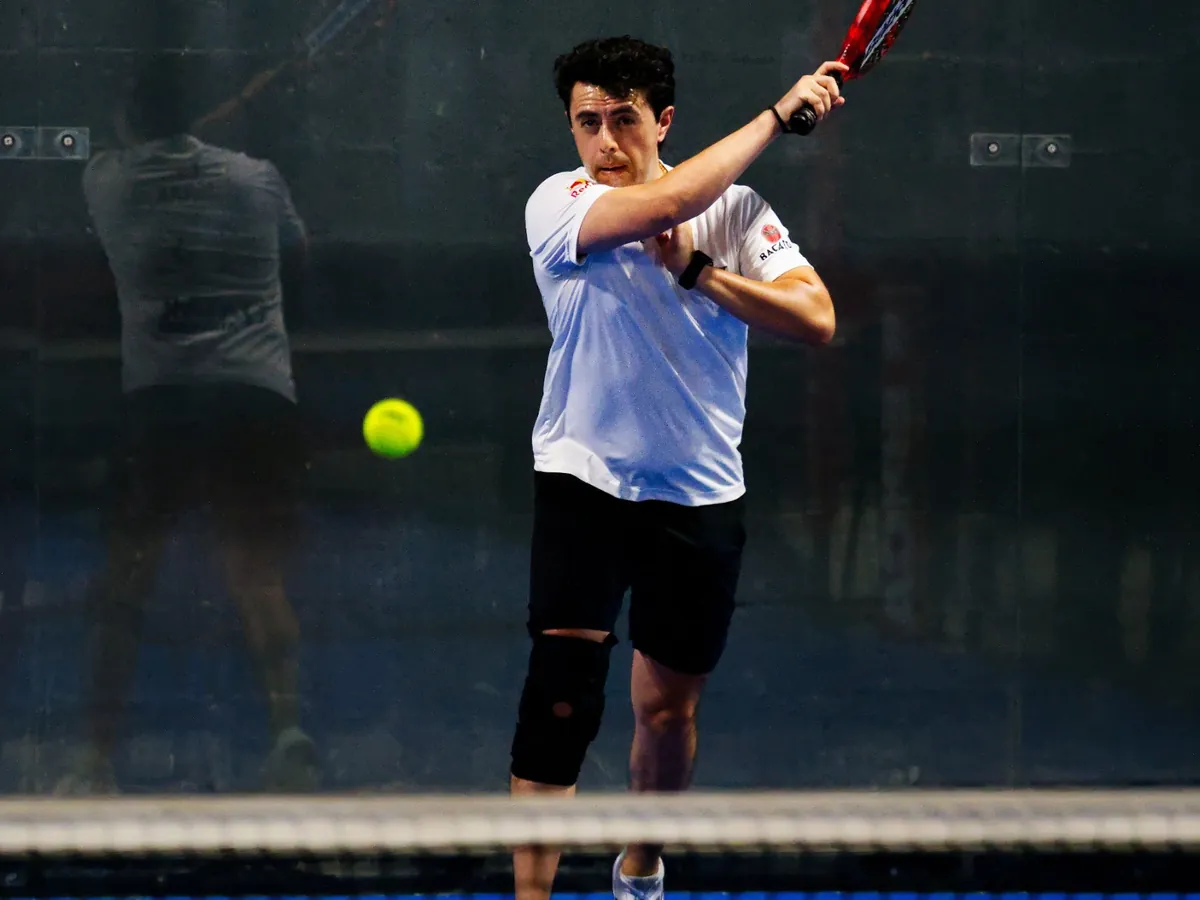
A padel court is 20 metres long and 10 metres wide. A tennis doubles court is 23.77m by 10.97m, so padel uses about a quarter less playing area, and far less once you include the space tennis needs around the court. The big difference is the walls: padel courts are enclosed by glass at each end and glass or mesh along the sides. You can let the ball bounce and hit it off the glass, and you can use the walls yourself.
Because the court is smaller, there is less ground to cover and the ball is rarely out of reach. That is a big part of why beginners enjoy padel straight away. It is also why padel clubs can fit several courts into an old warehouse or onto one tennis court’s footprint, which explains how quickly new UK venues have opened. See our padel court size guide for every line and measurement.
2. The walls change everything
In tennis, the point ends when the ball passes you. In padel, the ball can bounce once on your side and then come off the back or side glass, and you can still play it. That keeps rallies going and rewards patience. Learning when to let the ball come off the glass, instead of rushing to hit it early, is the first big adjustment for tennis players.
You can also play the ball against your own back wall to get it over the net (the “bajada” and “contra pared” shots), but the ball must not hit the opponents’ walls before it bounces. A ball that hits the mesh or glass on the other side first is out, just like a ball landing long in tennis.
3. The serve is underarm
In padel you bounce the ball behind the service line and hit it at or below waist height, diagonally into the opposite service box. It must bounce in the box before it reaches the back glass. The serve is a way to start the point, not a weapon. In tennis, a big first serve can win points on its own, which is one reason tennis takes longer to master.
Power wins fewer points in padel. The walls give opponents a second chance at any ball you smash flat and deep, so placement, lobs and patience beat raw pace.
4. Rackets and balls
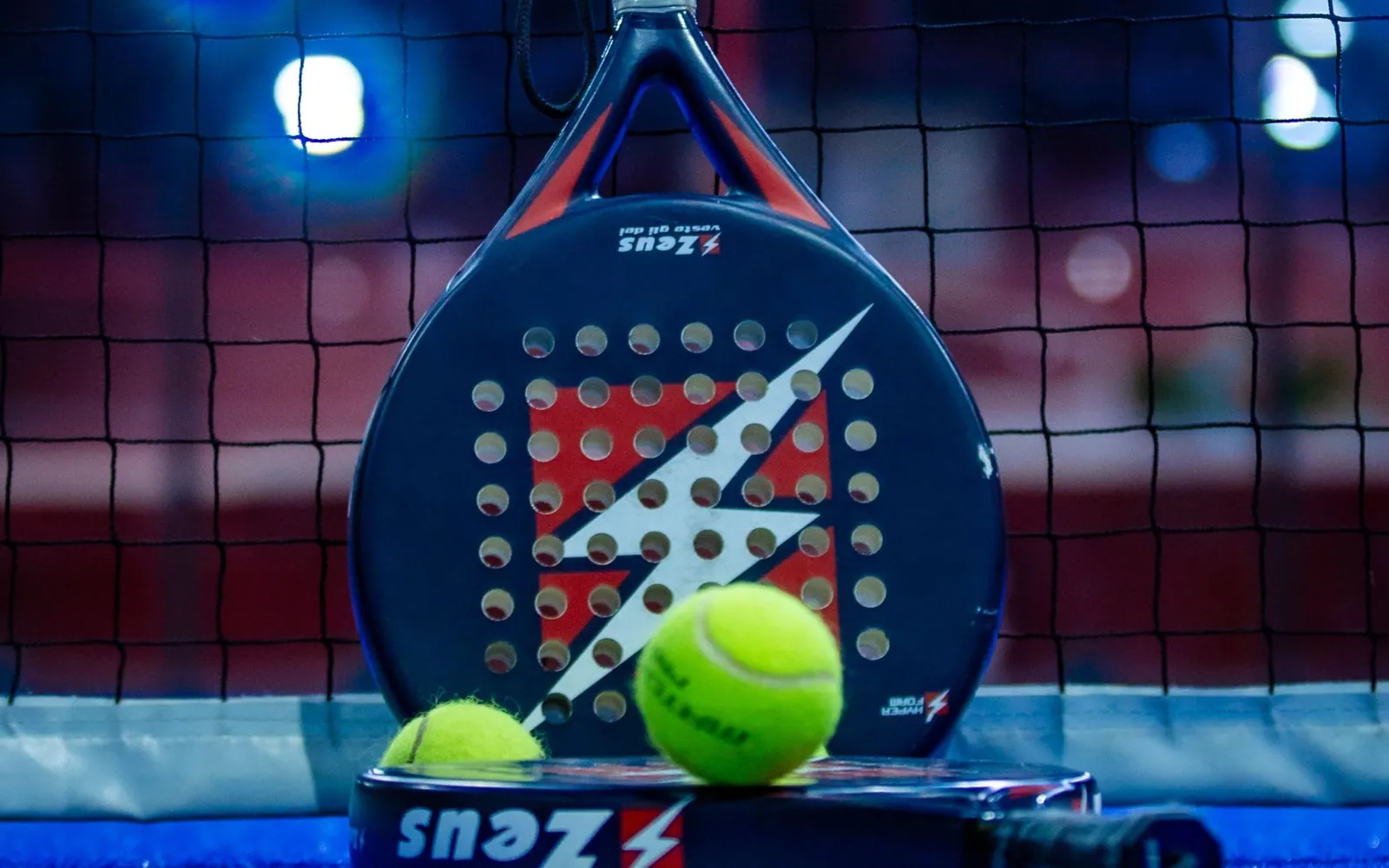
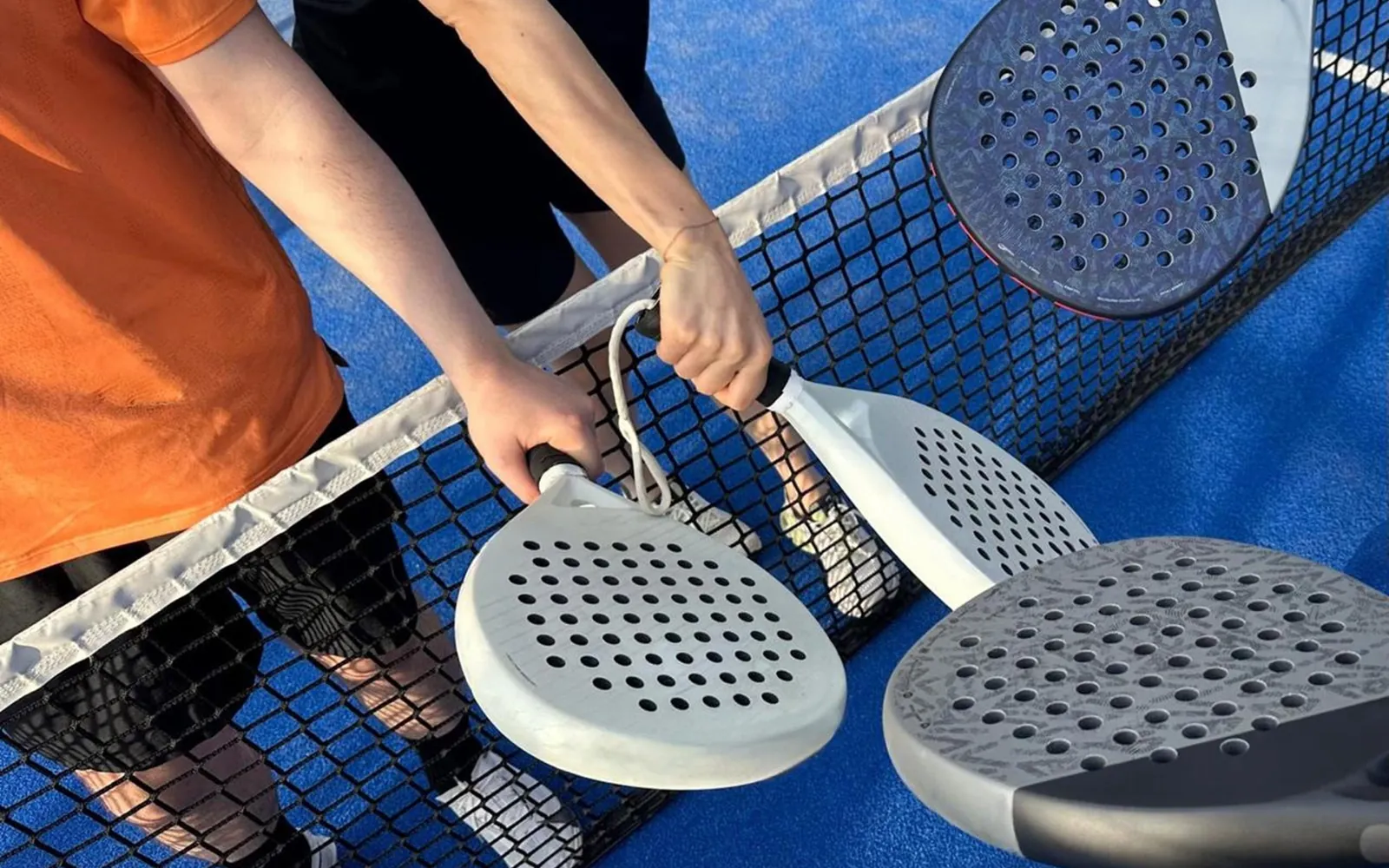
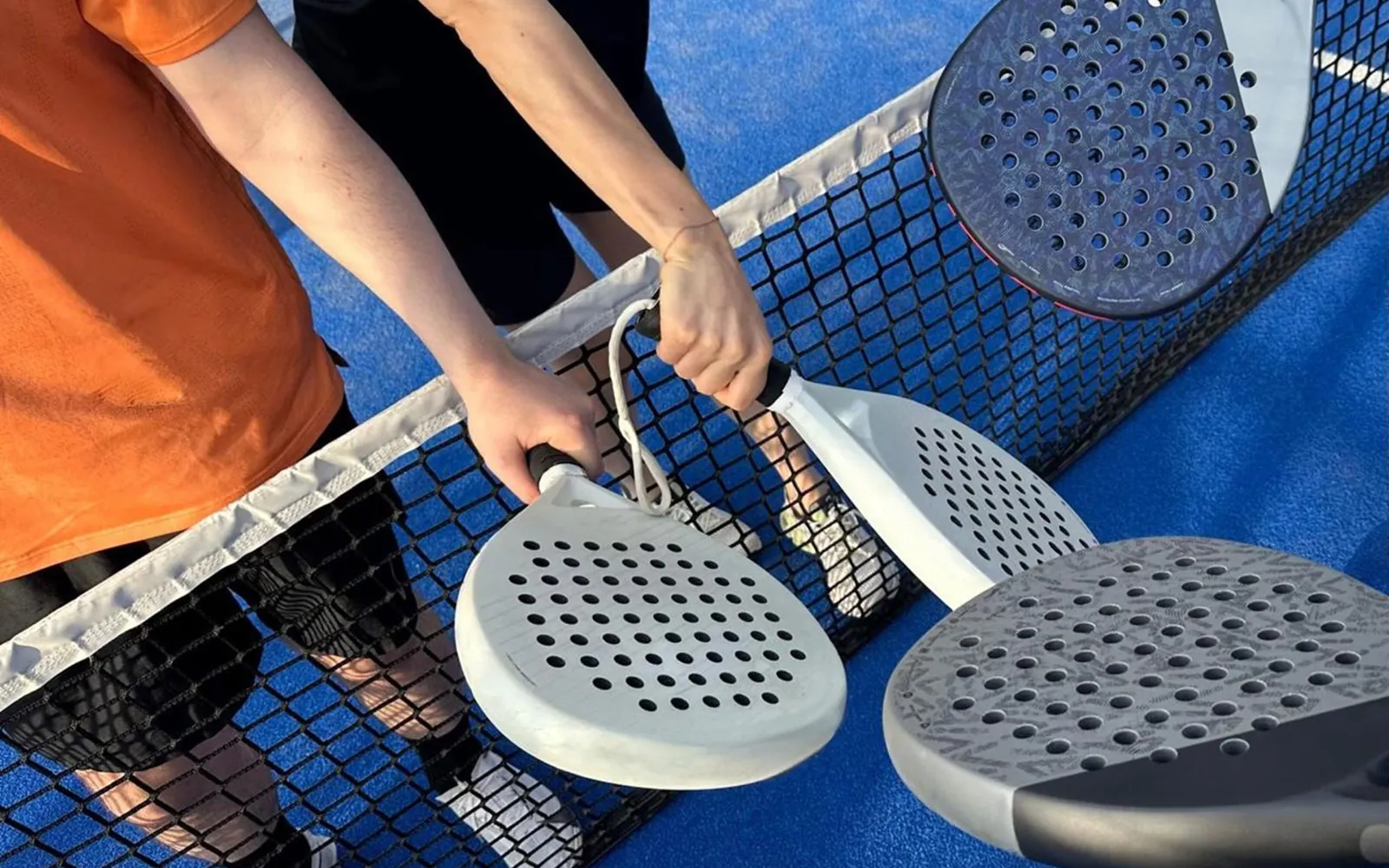
A padel racket is solid: a foam or EVA core with a carbon or fibreglass face, drilled with holes, and no strings. It is shorter than a tennis racket (no more than 45.5cm) and has a wrist strap. The short handle and big sweet spot make it easy to make contact, so beginners keep the ball in play.
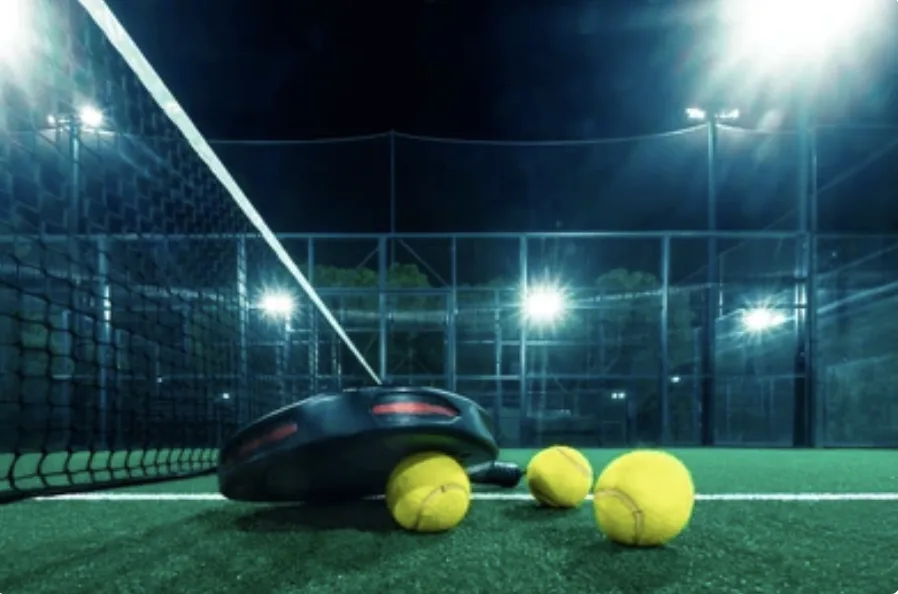
Padel balls look like tennis balls but are slightly smaller and lower pressure, so they bounce less. A tennis ball would fly off the glass too fast. You can learn more in our guides to padel balls and choosing a padel racket.
5. Scoring is the same, with one twist
Padel uses tennis scoring: 15, 30, 40, game, sets to six games and tie-breaks at 6-6. The difference is at deuce. Many social games and the pro tours use a golden point at 40-40, where the next point wins the game and the receiving pair chooses which side to receive on. In 2026 the FIP introduced the Star Point, where advantage is played twice and the next point decides it if the game is still level. Our padel rules and scoring guide explains all three.
6. Doubles almost every time
Tennis is played singles or doubles. Padel is almost always doubles, which makes it social and much easier to fit into a busy week: four people share the court and the cost. Singles padel exists on narrower 20m × 6m courts, and around 150 UK clubs now have one. See our singles padel guide and the full list of singles padel courts.
7. Tactics: the net is king
In padel, the pair that controls the net usually wins. Players move forward together, volley, and use lobs to push opponents back. From the back of the court you defend, let the ball come off the glass and lob to win the net back. Overheads are hit with control (the “bandeja” and “víbora”) rather than smashed, because a flat smash just comes back off the glass. Tennis has more variety of positions, and singles tennis is decided much more from the baseline.
8. Fitness and intensity
Both are a good workout. Tennis singles involves more running and longer sprints. Padel involves shorter, sharper movements, lots of turning to play off the glass and more time in rallies, because the ball is rarely dead. Because padel is doubles on a smaller court, it is gentler for most people and easier to keep playing into older age, but competitive padel is still very demanding.
9. Cost
In our check of 520 UK clubs, a padel court costs a typical £28 an hour off-peak and £40 at peak times, which works out at roughly £7 to £10 each in a four. Tennis can be cheaper, because many council and park courts are free or a few pounds an hour, but indoor tennis is usually dearer per player because only two or four people share a much bigger court. See our guide to what padel costs and the cheapest padel courts in each city.
10. Which is easier to learn?
Padel. The smaller court, underarm serve, short racket and walls mean most beginners can rally within an hour. Tennis takes longer: serving, timing groundstrokes on a fast ball and covering a big court all take practice. Tennis players have a head start in padel, especially at the net, but often need a few sessions to stop over-hitting and to trust the back glass.
11. Why padel is growing so fast in the UK
Padel has gone from a niche sport to one of the fastest-growing activities in Britain in a few years. The LTA, which runs padel in Britain, estimates 1.5 million people now play, on around 2,445 courts at 682 venues.
Part of the reason is that padel is easy to start, social, and quick to build: clubs convert warehouses, retail units and old tennis courts. Tennis is still far bigger overall, but many tennis clubs now add padel courts alongside, and many players play both.
12. Padel or paddle? Padel vs paddle tennis
The sport is spelt padel. Lots of people search for “paddle” or “paddle tennis”, and in the UK they almost always mean padel. In North America, though, paddle tennis (or platform tennis) is a different sport played on a small raised court with a wire surround, often outdoors in winter. Pickleball also uses a “paddle”, which adds to the confusion. If you are in Britain and want to play the glass-walled game, search for padel.
Padel or tennis: which should you play?
You like doubles, want a social game with friends and enjoy a fast, wall-to-wall rally.
You want to play singles, enjoy the technical challenge and have cheap courts nearby.
Tennis skills transfer well, especially volleys. Plenty of UK tennis clubs now have padel courts too.
Questions people ask
What is the main difference between padel and tennis?
Padel is played on a smaller court enclosed by glass walls that stay in play, almost always in doubles, with an underarm serve and a solid stringless racket. Tennis is played on a larger open court with an overarm serve and strung rackets.
Is padel easier than tennis?
Yes, for most beginners. The small court, underarm serve and walls keep the ball in play, so most people rally in their first session.
Can tennis players play padel?
Yes, and they usually pick it up quickly, especially at the net. The main adjustments are letting the ball come off the glass, serving underarm and hitting with less power.
Is padel scoring the same as tennis?
Yes: 15, 30, 40, game, sets to six. The difference is at 40-40, where padel often uses a golden point or the 2026 Star Point instead of playing advantage.
Can you play padel with a tennis racket or tennis balls?
No. Padel rackets are solid and shorter, and padel balls have lower pressure. A tennis ball bounces too high off the glass. Most clubs hire rackets for a few pounds.
Is padel the same as paddle tennis?
No. Padel is the glass-walled doubles game popular in the UK and Spain. Paddle tennis (platform tennis) is a separate North American sport played on a small raised court.
Is padel more expensive than tennis?
Usually per court, yes: a typical UK padel court costs £28 an hour off-peak. Split four ways that is about £7 each, which is similar to indoor tennis per player. Outdoor park tennis is often cheaper.
Is padel bigger than tennis in the UK?
Not yet. Tennis has far more players and courts, but padel is growing much faster. The LTA estimates 1.5 million people now play padel in Britain.